

Losing a tooth can affect far more than your smile. Missing teeth can make it difficult to chew comfortably, impact speech, and contribute to bone loss in the jaw over time. Fortunately, dental implants provide a long-lasting solution that closely mimics the function and appearance of natural teeth.
Many patients considering dental implants are curious about what actually happens during the procedure. Understanding each step of the process can help ease anxiety and make you feel more confident about moving forward with treatment. At Upper West Side Oral & Maxillofacial Surgery, patients receive personalized care using advanced technology and treatment planning to achieve predictable, long-term results.
The Consultation and Treatment Planning Phase
Before dental implant surgery begins, patients undergo a comprehensive consultation. During this appointment, the oral surgeon evaluates the condition of the teeth, gums, and jawbone to determine whether dental implants are the right option.
Advanced imaging plays an important role in treatment planning. Upper West Side Oral & Maxillofacial Surgery utilizes CBCT scans and 3D-guided planning to create highly accurate treatment plans for implant placement. These digital models allow the surgical team to evaluate bone structure, identify important anatomical landmarks, and determine the ideal location, angle, and depth for each implant.
For some patients, additional procedures may be recommended before implant placement. If significant bone loss has occurred, bone grafting may be necessary to create a stable foundation for the implant. In certain upper jaw cases, a sinus augmentation procedure may also be recommended to increase available bone volume.
This planning phase helps ensure that every aspect of treatment is customized to the patient's specific needs and goals.
Preparing for Dental Implant Surgery
Once the treatment plan is finalized, the surgical appointment is scheduled. Prior to the procedure, patients receive detailed instructions regarding eating, drinking, medications, and transportation arrangements if sedation will be used.
On the day of surgery, the oral surgeon reviews the treatment plan and answers any remaining questions. Most implant procedures are performed using local anesthesia to numb the treatment area. Depending on the complexity of the case and the patient's comfort level, additional sedation options may also be available. Oral and maxillofacial surgeons receive extensive training in anesthesia and sedation techniques, helping patients remain comfortable throughout treatment.
Once the area is fully numb and the patient is comfortable, the surgical procedure begins.
Step-by-Step: What Happens During Implant Placement?
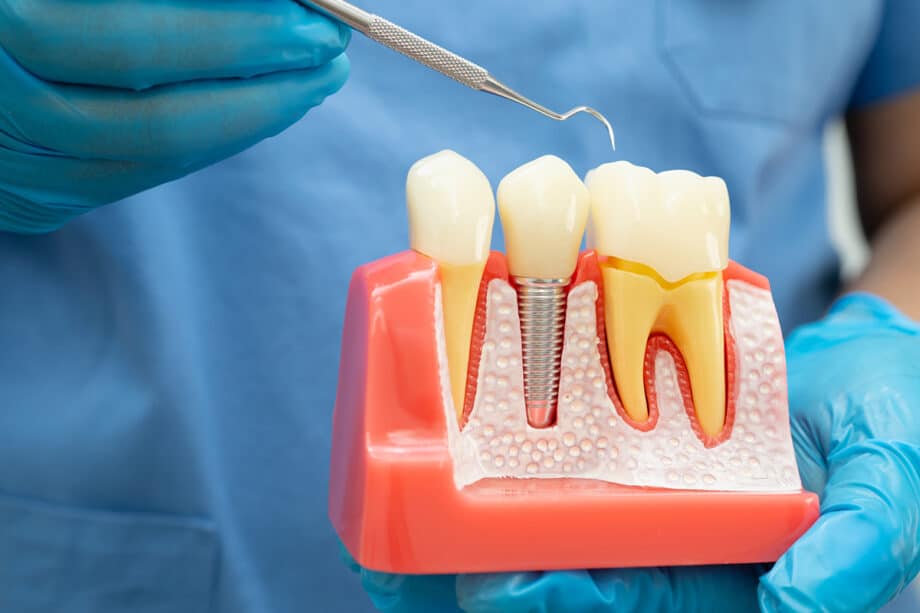
Dental implants are small titanium posts that serve as artificial tooth roots. The procedure is carefully planned and performed with precision to maximize long-term success.
The first step involves creating access to the jawbone. The surgeon makes a small opening in the gum tissue to expose the area where the implant will be placed.
Next, specialized instruments are used to prepare a precise space within the jawbone. Because the implant position has already been mapped using 3D imaging and virtual treatment planning, the surgeon can place the implant with exceptional accuracy. In many cases, a custom surgical guide is used to direct the exact placement location, angle, and depth. This technology enhances efficiency, safety, and predictability during surgery.
Once the site is prepared, the titanium implant is gently inserted into the bone. The implant acts as an artificial root that will eventually support a crown, bridge, or other restoration.
After placement, the gum tissue is repositioned around the implant and secured. Depending on the treatment plan, a healing cap may be attached to the implant during this stage.
The procedure itself is often faster than many patients expect. Single implant placements may take as little as one hour, while more complex cases involving multiple implants may require additional time.
The Healing Process After Surgery
The placement of the implant is only one part of the overall treatment process. Healing and integration with the jawbone are critical for long-term success.
Following surgery, patients may experience mild swelling, tenderness, or minor discomfort. These symptoms are typically manageable with prescribed or over-the-counter medications and generally improve within a few days. Many patients return to their normal routines relatively quickly after treatment.
During the healing phase, a process called osseointegration occurs. This is when the jawbone gradually grows around the titanium implant and fuses with it. The result is a stable, secure foundation that functions similarly to a natural tooth root.
The healing period varies from patient to patient but often takes several months. During this time, following post-operative instructions is essential. Patients should maintain excellent oral hygiene, attend follow-up appointments, and avoid habits that could interfere with healing.
Once osseointegration is complete, the implant is ready to support the final restoration.
Receiving the Final Restoration
After the implant has fully integrated with the jawbone, the restorative phase begins.
An abutment, which serves as a connector between the implant and the replacement tooth, is attached to the implant. Impressions or digital scans are then used to create a custom restoration that matches the surrounding teeth in shape, size, and color.
Depending on the patient's needs, the final restoration may be:
- A single dental crown
- A dental bridge
- A full-arch restoration supported by multiple implants
The completed restoration is securely attached to the implant, restoring both function and appearance.
One of the primary benefits of dental implants is their stability. Unlike removable appliances, implants become part of the jaw structure and allow patients to eat, speak, and smile with confidence. With proper care, implants can provide decades of reliable function.
Why Advanced Technology Matters During Dental Implant Surgery
Modern implant dentistry has evolved significantly thanks to advancements in digital imaging and guided surgery.
At Upper West Side Oral & Maxillofacial Surgery, 3D-guided implant placement helps create more accurate treatment plans and more predictable outcomes. Virtual treatment planning allows the surgeon to visualize the procedure before surgery even begins. Surgical guides can then transfer that plan directly to the patient during treatment.
These technologies offer several advantages, including:
- Increased precision
- Enhanced safety
- Improved efficiency
- Better aesthetic outcomes
- Greater predictability
By carefully planning every stage of treatment, patients can feel confident that their procedure is being performed with a high level of accuracy and attention to detail.
Restoring Your Smile With Confidence
Dental implant surgery is a highly predictable procedure that has helped countless patients restore missing teeth and improve their quality of life. While the process involves multiple stages, each step is carefully designed to create a strong, stable, and natural-looking result.
From advanced 3D treatment planning to precise implant placement and long-term restoration, dental implants offer a reliable solution for replacing missing teeth. If you are considering dental implants, scheduling a consultation with an experienced oral and maxillofacial surgeon can help you understand your options and determine the best treatment approach for your needs.
Frequently Asked Questions About Dental Implant Surgery
Is dental implant surgery painful?
Most patients report minimal discomfort during implant placement because local anesthesia is used to numb the treatment area. Mild soreness and swelling after surgery are common but generally manageable with medication and proper aftercare.
How long does it take for dental implants to heal?
Healing times vary depending on the individual and the complexity of treatment. In most cases, the implant requires several months to fully integrate with the jawbone before the final restoration can be attached.
Are dental implants permanent?
Dental implants are designed to be a long-term tooth replacement solution. With proper oral hygiene, routine dental visits, and good overall health, many implants can last for decades.
Can a dental implant be placed immediately after a tooth extraction?
In some cases, an implant can be placed on the same day as a tooth extraction. However, eligibility depends on factors such as bone quality, gum health, and the presence of infection. Your oral surgeon will determine the safest and most effective timing for implant placement.
What is the success rate of dental implants?
Dental implants have a very high success rate, often exceeding 95% when placed by experienced specialists and properly maintained. Good oral hygiene, regular dental visits, and avoiding tobacco use can help maximize the long-term success of your implant.
We are Upper West Side Oral & Maxillofacial Surgery, dedicated to providing compassionate, state-of-the-art oral surgical care for patients throughout Manhattan. Our team combines advanced technology, personalized treatment planning, and extensive surgical expertise to help patients achieve healthy, confident smiles. Whether you need dental implants or another oral surgery procedure, we are committed to delivering exceptional care every step of the way. Contact us today to schedule a consultation.